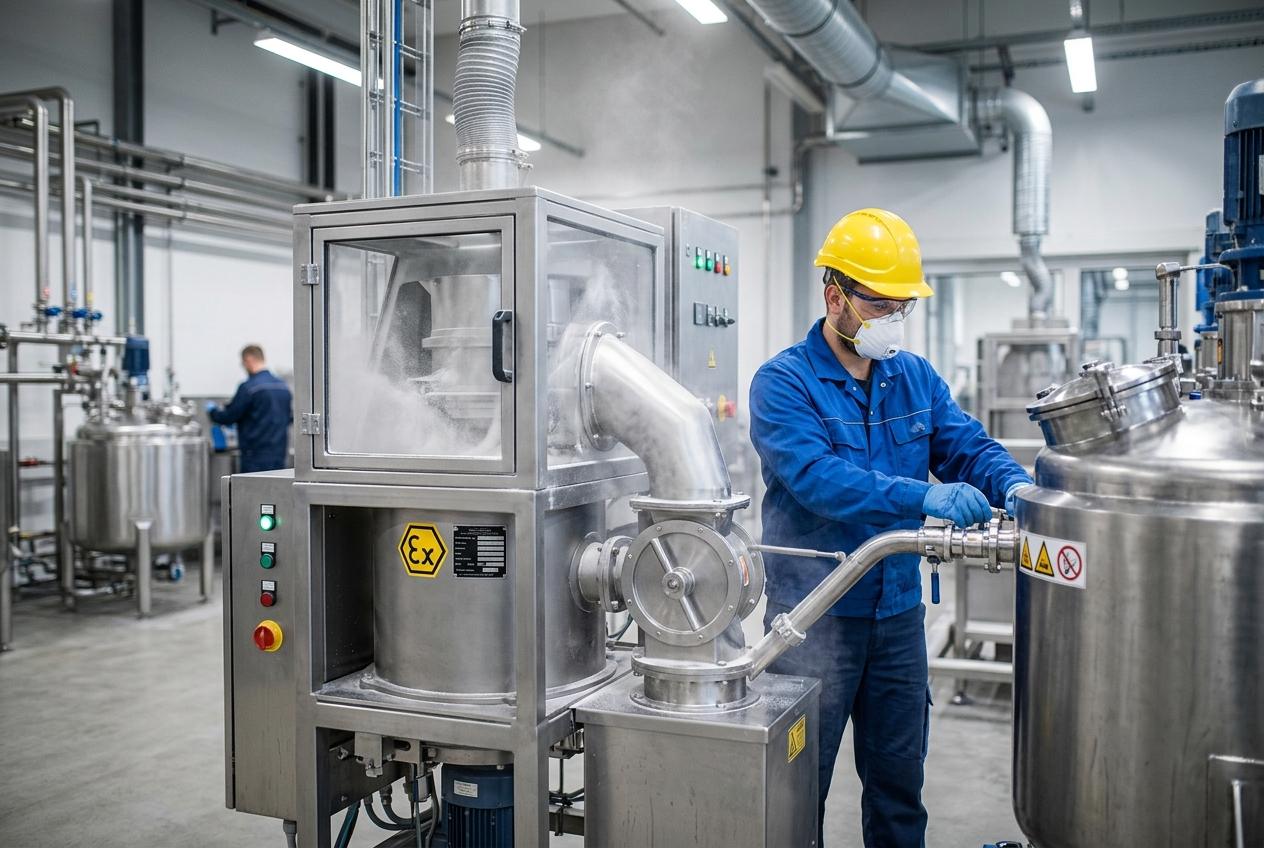
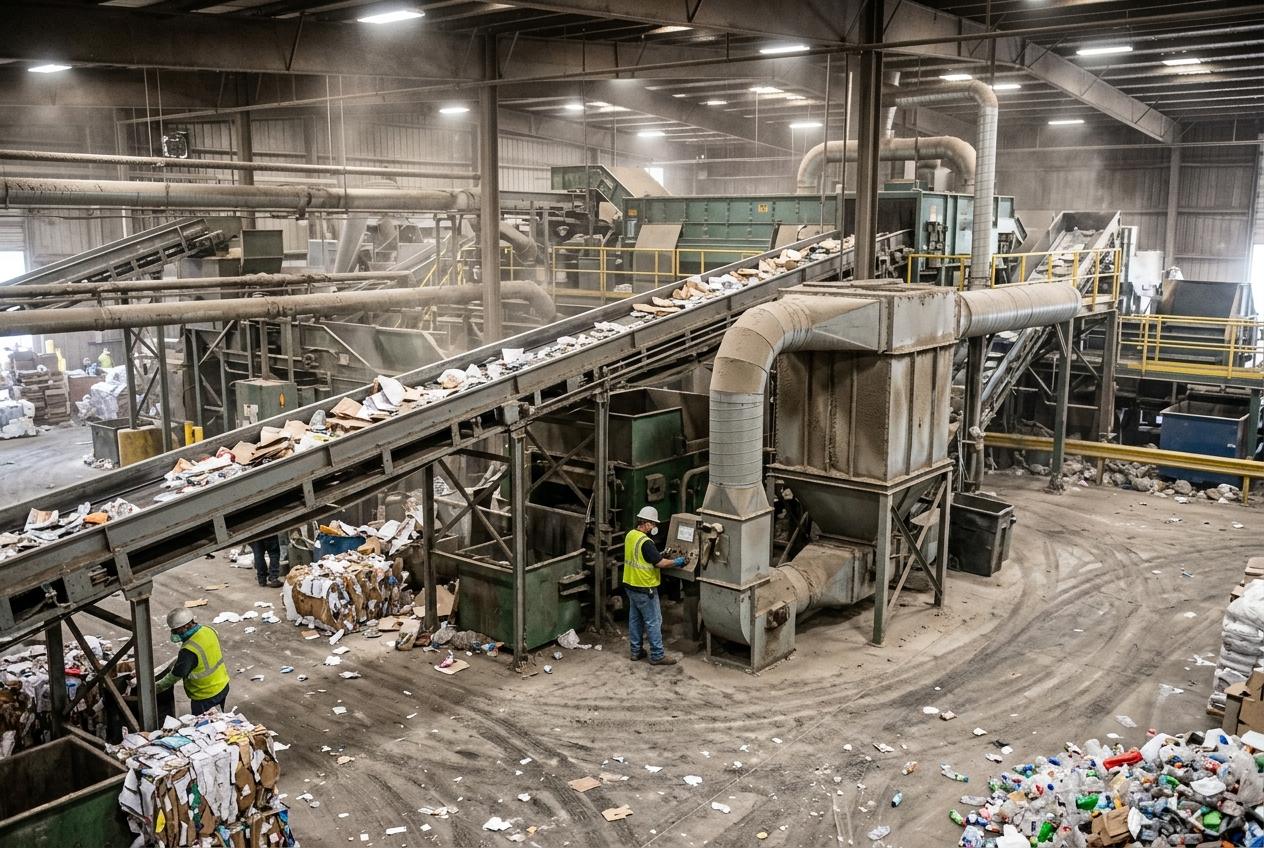
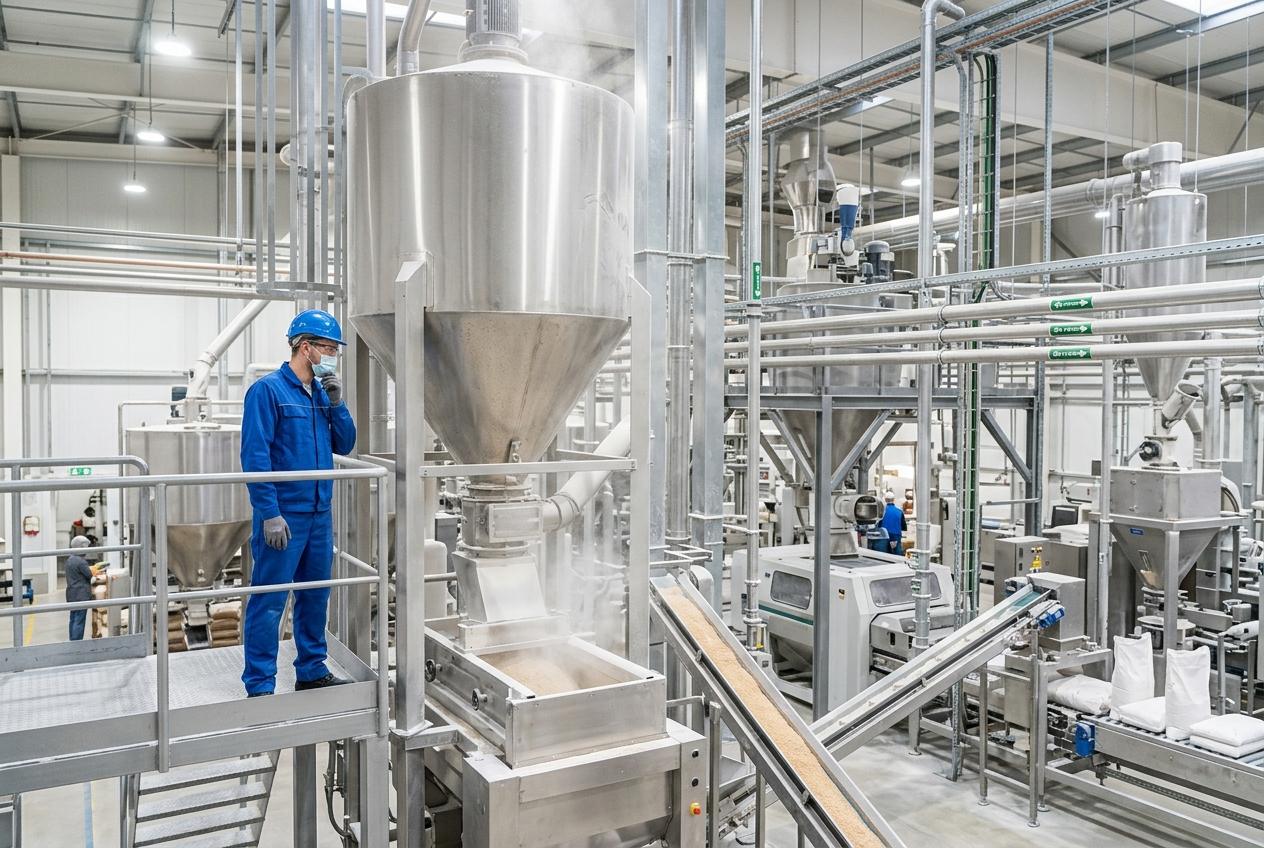
When combustible dust ignites in an industrial facility, the consequences can be catastrophic. Choosing between airline and electric ATEX vacuums isn’t merely a procurement decision: it’s a safety calculation that affects every worker in your hazardous area. The global industrial vacuum cleaner market is Projected to reach USD 1.45 billion by 2031, with explosion-proof ATEX-certified models Expanding at an 8.02% CAGR through the same period. This growth reflects increasing regulatory pressure and a hard-earned understanding that standard cleaning equipment can become an ignition source in explosive atmospheres. Europe currently holds the largest 31.70% share of this market, driven by stringent ATEX directive enforcement. But which technology actually delivers superior safety performance? The answer depends on your specific hazard classification, operational requirements, and infrastructure constraints. Both pneumatic and electric ATEX vacuums meet certification standards, yet they achieve safety through fundamentally different engineering approaches. Understanding these differences matters more than marketing claims.
Defining ATEX Standards and Hazardous Area Classifications
ATEX certification derives from two European directives governing equipment and workplace safety in explosive atmospheres. Equipment manufacturers must demonstrate their products cannot become ignition sources underspecified conditions, while employers must classify their workplaces according to explosion risk probability.
Understanding Zones 0, 1, 2 and Dust Zones 20, 21, 22
Gas and vapour hazards fall into three zones based on frequency and duration of explosive atmosphere presence. Zone 0 indicates continuous or long-period presence, Zone 1 covers occasional occurrence during normal operations, and Zone 2 applies where explosive atmospheres appear only briefly or abnormally. Dust classifications mirror this structure: Zone 20 for continuous presence, Zone 21 for occasional occurrence, and Zone 22 for brief or abnormal situations.
Your vacuum selection hinges directly on these classifications. Zone 0 and Zone 20 areas demand the highest protection levels, typically requiring Category 1 equipment with multiple independent safety barriers. Many electric vacuums achieve only Category 2 or Category 3 certification, restricting their use to lower-risk zones.
The Critical Role of Static Dissipation in Explosive Atmospheres
Static electricity represents one of the most underestimated ignition sources in dust-handling operations. Material flowing through hoses and containers generates substantial electrostatic charge. Without proper dissipation, a single discharge can ignite suspended particles.
Both vacuum types must incorporate conductive or anti static materials throughout their construction. Hoses, containers, and fittings require electrical continuity to ground. Vacuums must be properly grounded to reduce electrical shock risk and prevent static accumulation. This grounding requirement applies regardless of power source, though the implementation differs between pneumatic and electric systems.
Pneumatic Air-Driven Vacuums: The Case for Compressed Air
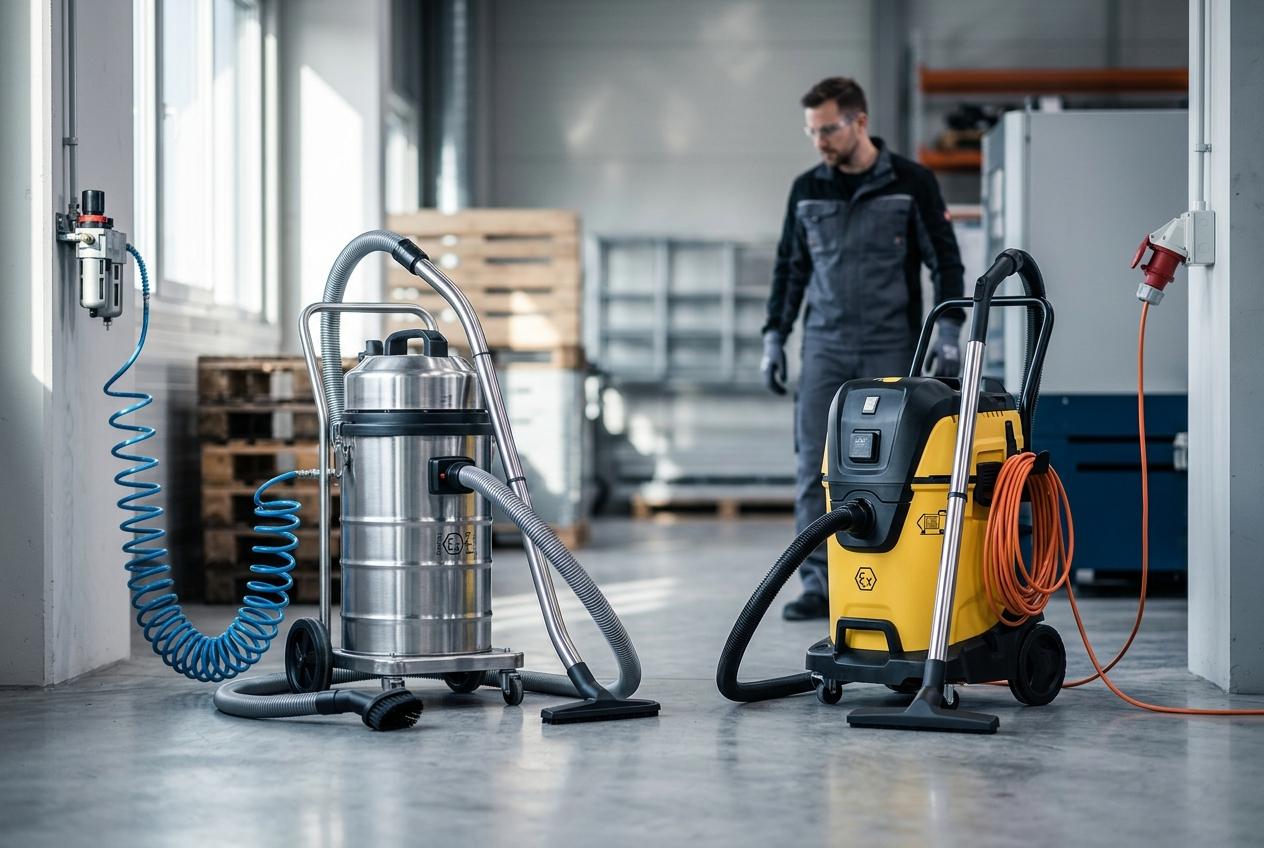
Airline vacuums operate on a fundamentally different principle Than their electric counterparts. Rather than using motor-driven impellers, they generate suction through Venturi affect technology powered by compressed air.
Eliminating Heat Generation and Electrical Spark Risks
The safety argument for pneumatic vacuums centres on what they lack rather than what they contain. As one industry source explains, “Pneumatic vacuums utilise a Venturi system to generate suction without electricity. This makes them inherently safe for hazardous locations Because they generate no heat and have no electrical motors that could spark.”
This absence of electrical components eliminates entire categories of ignition risk. No motor brushes can arc, no windings can overheat, no control circuits can fail and generate sparks. The vacuum becomes a passive pneumatic device with no internal energy sources capable of ignition.
For Zone 0 and Zone 20 applications, this inherent safety offers significant advantages. Certification becomes simpler because fewer potential ignition sources require protection. The safety case rests on physics rather than engineered barriers.
Maintenance and Longevity in Harsh Industrial Environments
Pneumatic vacuums typically feature simpler mechanical construction with fewer components subject to wear. Without motors, brushes, bearings, or electrical controls, the failure modes reduce substantially. Maintenance focuses primarily on air supply connections, Venturi components, and filtration systems.
In harsh environments with temperature extremes, moisture, or corrosive atmospheres, this simplicity translates to reliability. Electric motors require protection from environmental factors that pneumatic systems tolerate naturally. Facilities processing aggressive chemicals often favour airline vacuums for this durability advantage.
Electric ATEX Vacuums: Motor Protection and Operational Efficiency
Electric ATEX vacuums achieve safety certification through engineered protection rather than inherent absence of ignition sources. Modern designs incorporate multiple safety barriers to prevent motors and electrical components from igniting surrounding atmospheres.
Advanced Enclosure and Cooling Technologies
Flameproof enclosures represent the most common protection method for electric ATEX vacuums. These heavy-duty housings contain any internal explosion while preventing flame propagation to the external atmosphere. Joints and gaps meet precise dimensional tolerances that cool escaping gases below ignition temperature.
Alternative approaches include increased safety construction, which prevents sparks and excessive temperatures during normal operation, and pressurised enclosures that maintain positive pressure with inert gas. Each method suits different applications and zone classifications.
Modern electric ATEX vacuums also incorporate sophisticated cooling systems to prevent motor overheating. Thermal cutouts, temperature monitoring, and forced-air cooling maintain safe operating temperatures even during extended use. These systems add complexity but enable sustained high-performance operation.
Portability and Infrastructure Requirements for Electric Units
Electric vacuums offer a significant practical advantage: they require only electrical supply rather than compressed air infrastructure. Many facilities lack adequate compressed air capacity for pneumatic vacuum operation, particularly at the volumes required for effective industrial cleaning.
Portable electric ATEX vacuums can operate anywhere with appropriate electrical supply, making them suitable for maintenance tasks across large facilities. Pneumatic units remain tethered to air supply points or require portable compressors, adding logistical complexity and cost.
Comparative Safety Analysis: Ignition Sources and Risk Mitigation
Direct safety comparison requires examining all potential ignition sources and the protection methods each technology employs. Neither system is universally safer: context determines which approach provides superior protection.
Pneumatic vacuums eliminate electrical ignition sources entirely but introduce compressed air system considerations. Air supply contamination with oil or moisture can create problems, and high-velocity air discharge may disturb settled dust, creating secondary explosion risks. Proper air treatment and discharge management address these concerns.
Electric vacuums retain potential electrical ignition sources but control them through certified protection methods. When properly maintained and operated within their design parameters, these systems achieve equivalent safety levels for their certified zone classifications. OSHA-approved HEPA vacuums using appropriate filtration can Capture 99.97% of particles 0.3 microns or larger, preventing dangerous dust accumulation regardless of power source.
The critical distinction lies in failure modes. Pneumatic systems fail safe: loss of air supply simply stops the vacuum. Electric systems require active protection to remain safe, meaning component failures could potentially create hazards if protective systems malfunction simultaneously.
Operational Costs and Resource Consumption
Safety considerations should drive primary selection criteria, but operational economics influence long-term viability. Both technologies carry distinct cost profiles that affect total ownership expenses.
The High Energy Cost of Compressed Air Systems
Compressed air ranks among the most expensive energy carriers in industrial facilities. Generating one cubic Metre of compressed air typically costs five to ten times more than equivalent electrical energy. Pneumatic vacuums consume substantial air volumes during operation, creating ongoing operational expenses that exceed electric alternatives.
Electric ATEX vacuums operate more efficiently from an energy perspective, converting electrical input to suction with fewer conversion losses. For facilities with limited compressed air capacity, adding compressor infrastructure solely for vacuum operation rarely makes economic sense.
However, facilities with existing high-capacity compressed air systems face different calculations. Marginal air consumption for vacuum operation adds minimal cost when infrastructure already exists. The total cost comparison must account for existing resources and infrastructure investment requirements.
Selecting the Right Solution for Your Specific Workplace Hazards
Your optimal choice depends on several interconnected factors. Zone classification establishes minimum certification requirements: Zone 0 and Zone 20 applications may mandate pneumatic systems or require premium Category 1 electric equipment. Lower-risk zones permit broader equipment selection.
Existing infrastructure significantly influences practical choices. Facilities with robust compressed air systems can deploy pneumatic vacuums economically, while those lacking air capacity may find electric units more practical despite higher equipment costs.
Operational requirements matter equally. Continuous heavy-duty cleaning favours electric systems with superior sustained performance. Intermittent use in highest-risk areas may justify pneumatic equipment despite operational limitations.
Maintenance capabilities also factor into selection. Electric ATEX vacuums require specialised servicing to maintain certification validity, while pneumatic systems demand less technical expertise for routine maintenance.
The safest choice isn’t always the most expensive or most technologically sophisticated option. It’s the equipment properly matched to your specific hazards, operated within its design parameters, and maintained according to manufacturer specifications. Not sure if your site is at risk? Our specialists can assess your facility, identify compliance gaps, and recommend the most appropriate solution. Book a free site assessment to get started.