Few brands in the professional cleaning equipment sector carry the same weight as Nilfisk. With over a century of engineering behind them and a product range spanning everything from compact domestic pressure washers to industrial-grade vacuum systems capable of handling hazardous dust, the Danish manufacturer has earned a reputation that precedes it.
Whether you’re a facilities manager sourcing equipment for a warehouse, a contractor looking for reliable site cleaning tools, or a homeowner wanting commercial-grade performance in your garage, Nilfisk likely has something designed for your exact situation.
This guide reviews their best 2026 product line-up, and breaks down what each product offers, and gives you an honest assessment of where Nilfisk products excel.
Key Takeaways
- Nilfisk is a Danish manufacturer specialising in professional and industrial cleaning equipment, including vacuum cleaners, pressure washers, scrubber dryers, and sweepers. They’re particularly respected in sectors where dust control and workplace safety are non-negotiable: manufacturing, food processing, pharmaceuticals, and construction.
- Price range: Entry-level domestic products start around £150-£300, while professional-grade vacuums and pressure washers sit between £500 and £2,000. Industrial machines, including ATEX-certified vacuums and ride-on scrubbers, can range from £3,000 to well over £20,000 depending on specification.
- Key differentiators: Nilfisk’s filtration technology is a genuine standout. Their H-class and HEPA-certified vacuums meet stringent occupational health standards, and their ATEX-rated machines are trusted across Europe for explosive dust environments. Build quality tends to be a step above mass-market competitors.
- Best for: Facilities managers, cleaning contractors, health and safety professionals, and industrial operations where dust compliance, durability, and long-term cost of ownership matter more than the cheapest upfront price.
About Nilfisk
Nilfisk was founded in 1906 in Copenhagen, Denmark, by Peder Andersen Fisker and Hans Marius Nielsen. The company originally operated under the name Fisker & Nielsen and produced its first vacuum cleaner, the Nilfisk C1, in 1910. That machine weighed roughly 17.5 kilograms and was considered a breakthrough for its time: compact enough for a single person to operate when competitors required two or three people to manage their equipment.
Over the following decades, Nilfisk expanded from domestic vacuum cleaners into a full spectrum of professional cleaning solutions. The company now operates in more than 100 countries and employs thousands of people globally. Their headquarters remain in Denmark, though manufacturing and distribution facilities are spread across Europe, the Americas, and Asia-Pacific.
Nilfisk’s market position sits firmly in the professional and industrial segment. While they do produce consumer-grade products, their core strength lies in equipment designed for demanding commercial environments. Their machines appear regularly in pharmaceutical clean rooms, food production facilities, automotive plants, and construction sites where dust control is both a regulatory requirement and a genuine safety concern.
What separates Nilfisk from many competitors is their focus on filtration performance and compliance with occupational exposure limits. Their industrial vacuums routinely meet or exceed standards set by bodies like the HSE in the UK and OSHA internationally.
For facilities dealing with combustible dust, their ATEX-certified range addresses the specific requirements of Directive 2014/34/EU, which is critical given that dust explosions remain a real and often underestimated risk across multiple industries. The 2008 Imperial Sugar refinery explosion in the United States, which killed 14 workers and injured 36, remains a stark reminder of what happens when dust management is treated as an afterthought.
Nilfisk Product Lines
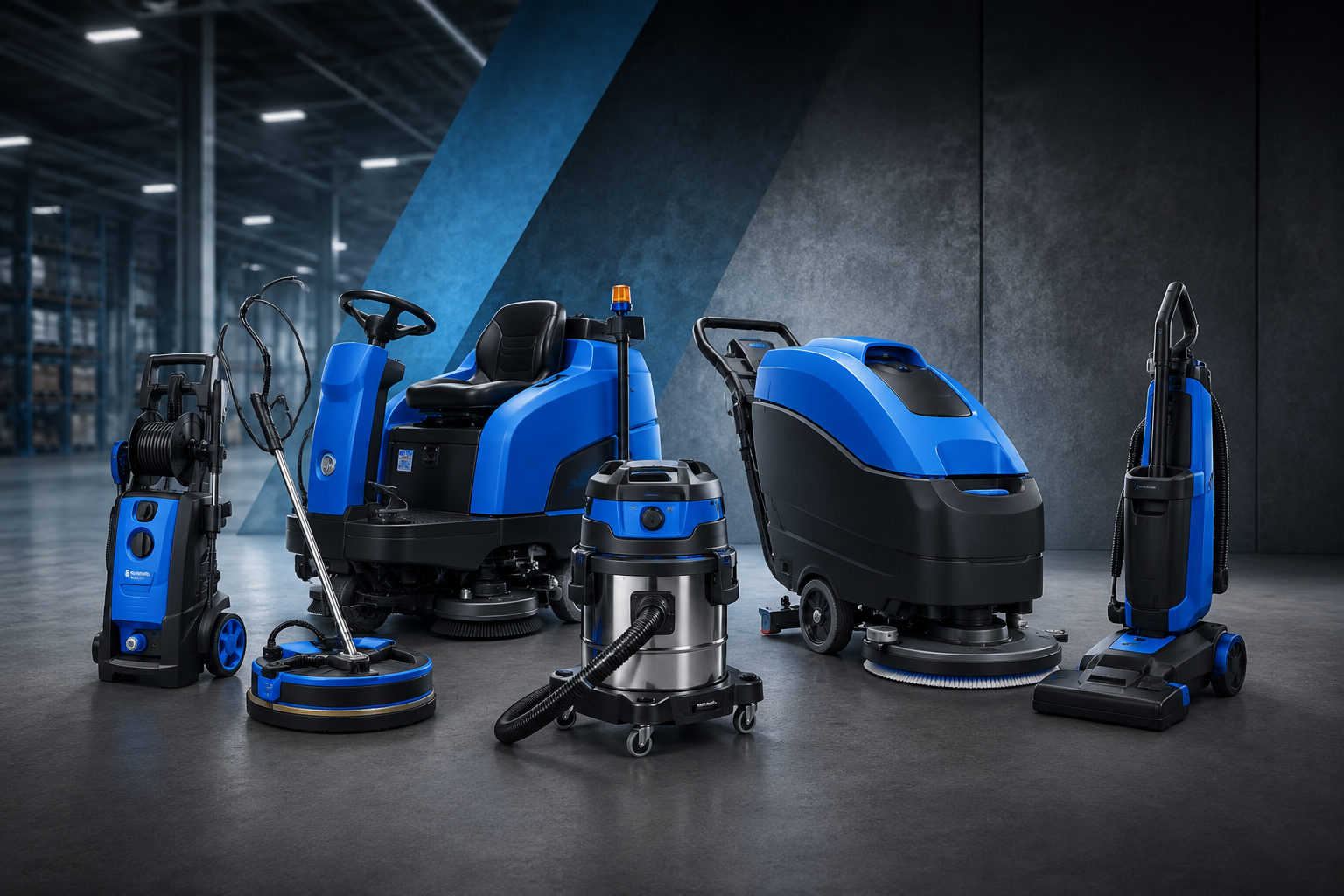
Nilfisk organises its products into several distinct categories, each targeting different users and applications. Understanding these lines helps you avoid overspending on features you don’t need or, worse, buying equipment that’s underspecified for your environment.
Vacuum Cleaners
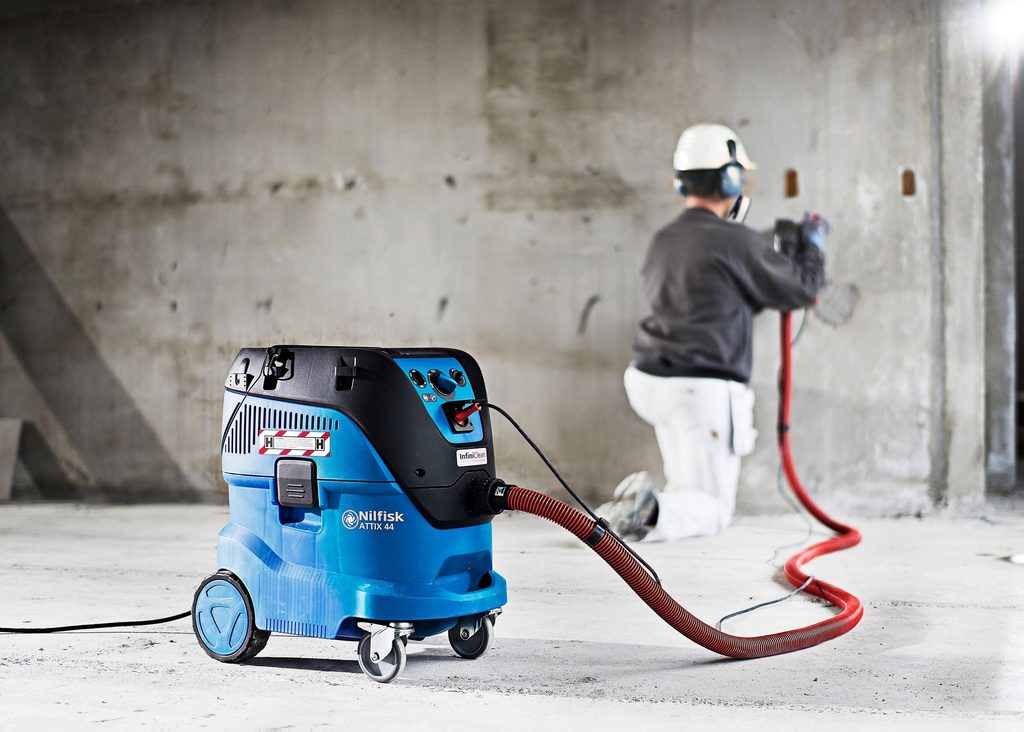
This is Nilfisk’s broadest range, spanning domestic canister vacuums through to industrial single-phase and three-phase machines. The AERO series handles general commercial cleaning duties, while the ATTIX line steps up to wet and dry applications on construction sites and workshops.
At the top end, the IVS (Industrial Vacuum Solutions) range includes machines rated for continuous-duty operation in manufacturing environments. Prices range from approximately £200 for a basic AERO unit to £5,000+ for a heavy-duty IVS system. ATEX-certified models for explosive atmospheres sit at the premium end, often exceeding £8,000 depending on zone classification.
Pressure Washers
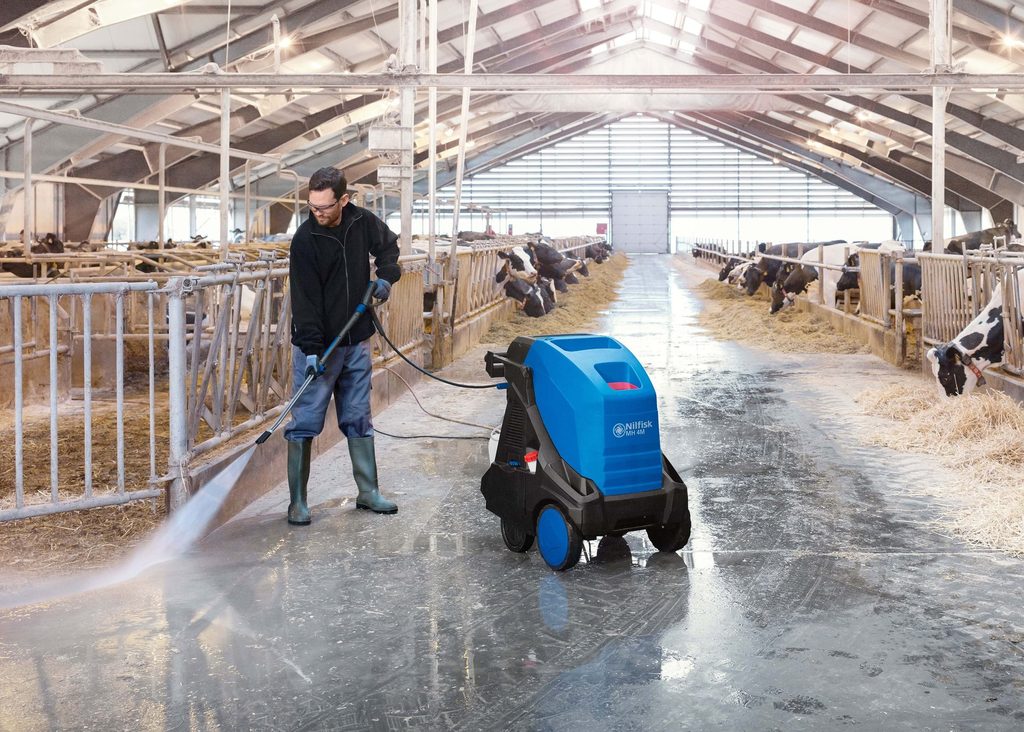
Nilfisk’s pressure washer line-up covers cold water, hot water, and stationary models. The CORE and PREMIUM ranges serve domestic and light commercial users, typically priced between £150 and £600. The professional MC and MH series are built for daily commercial use: think fleet washing, agricultural equipment, and industrial degreasing. Hot water models in the MH range start around £2,500 and can exceed £6,000 for trailer-mounted units.
Scrubber Dryers
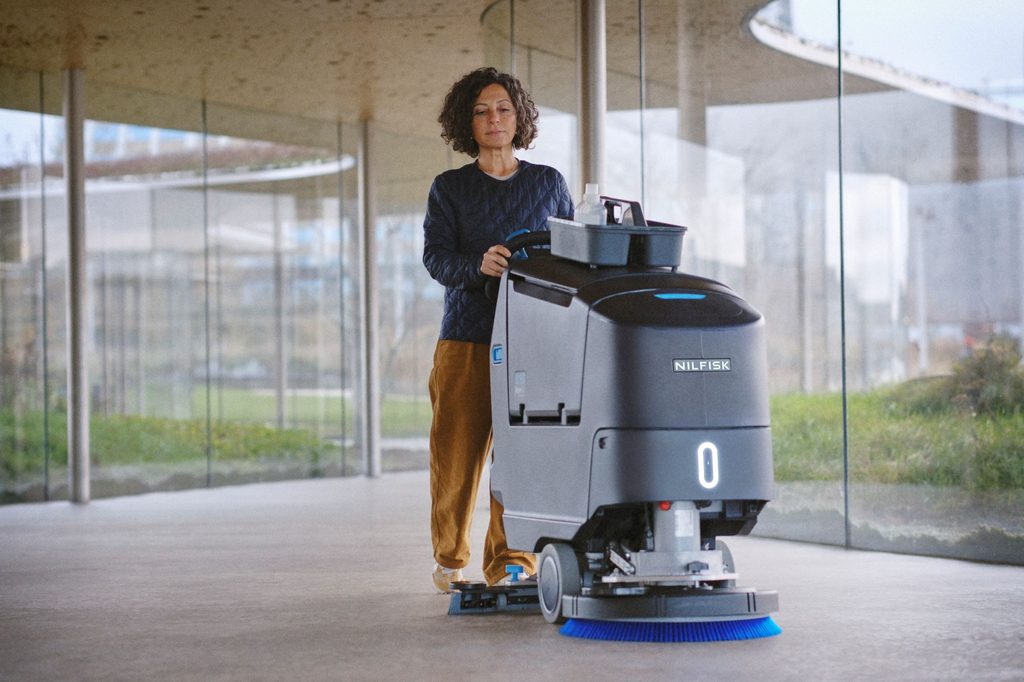
Designed for floor cleaning in retail, healthcare, logistics, and manufacturing settings, Nilfisk’s scrubber dryers come in walk-behind and ride-on configurations. The SC100 is a compact walk-behind suitable for small retail spaces, while the SC6500 ride-on model covers large warehouse floors efficiently. Pricing runs from around £1,500 for basic walk-behind units to £25,000+ for the largest ride-on machines with integrated dosing systems.
Sweepers
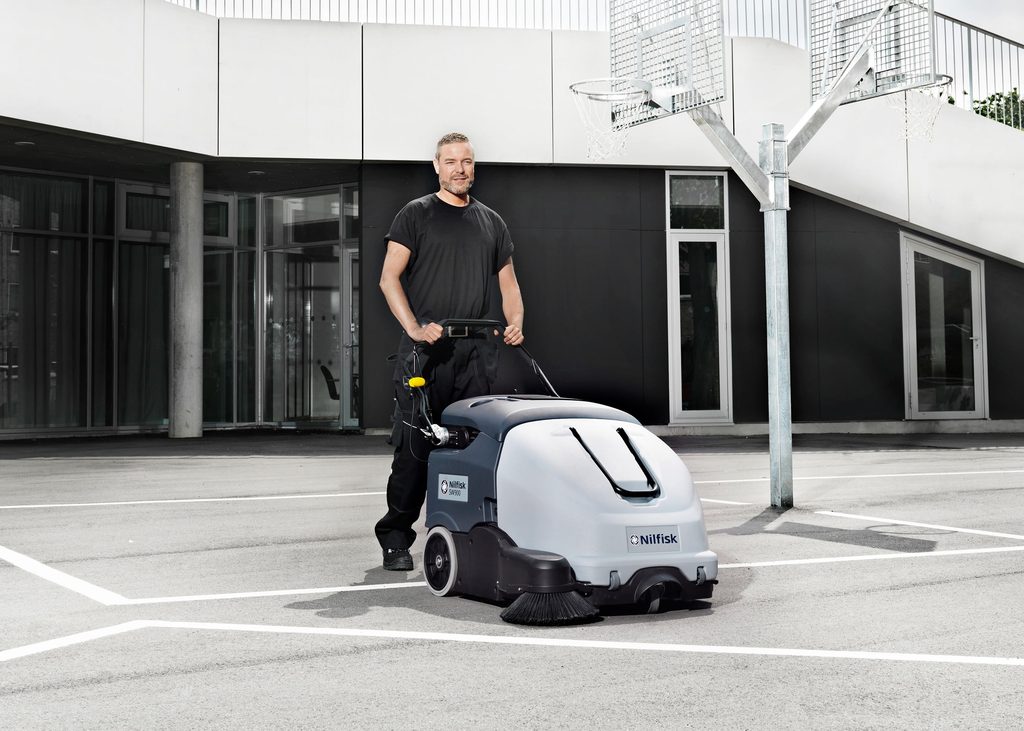
Nilfisk produces both manual push sweepers and powered ride-on sweepers. The SW range is popular in car parks, distribution centres, and outdoor commercial areas. Manual sweepers start at a few hundred pounds, while powered models with dust suppression can reach £15,000 or more.
Specialty and ATEX Equipment
This niche but critical line includes vacuums and dust extraction systems certified for use in potentially explosive atmospheres. These machines are engineered to prevent ignition sources, with grounded components, anti-static filters, and spark-arresting designs. They’re essential in industries handling fine combustible powders: flour, sugar, metal dust, wood dust, and pharmaceutical compounds.
Best Nilfisk Products in 2026
Selecting the right machine depends entirely on your application, but these models consistently earn strong reviews and represent genuine value across Nilfisk’s 2026 catalogue.
Nilfisk ATTIX 40 TYPE22 240/1/50 Vacuum Cleaner
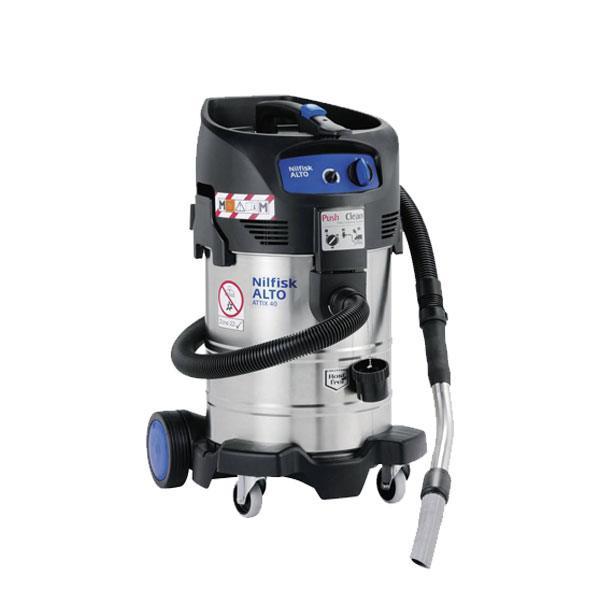
For industrial facilities needing certified safety when handling combustible dust, the Nilfisk ATTIX 40 Type 22 is a robust wet-and-dry vacuum cleaner approved for both ATEX Zone 22 environments and M-Class dust extraction.
The integrated FlowSensor system continuously monitors hose airflow and triggers an acoustic alarm if airspeed drops below 20 m/s, which protects workers against hazardous airborne particulates during heavy-duty cleaning. At approximately £2,220, it sits in the sweet spot between standard workshop vacuums and overpriced custom-built extraction plant systems.
Nilfisk ATTIX 40-01 PC INOX 220-240V 50/60HZ Vacuum Cleaner
For commercial operators requiring durable wet-and-dry performance in demanding environments, the ATTIX 40-01 PC INOX is a heavy-duty industrial vacuum cleaner featuring a corrosion-resistant 37-litre stainless steel container and 3,700 L/min of airflow.
The Push&Clean semi-automatic system allows users to clear the filter in seconds at the press of a button, which maintains peak suction power during tough liquid collection and fine dust removal. At approximately £765, it sits in the sweet spot between lightweight plastic-bodied workshop vacs and overly complex, high-end industrial extraction systems.
Nilfisk ATTIX 33 2M 230V Wet & Dry
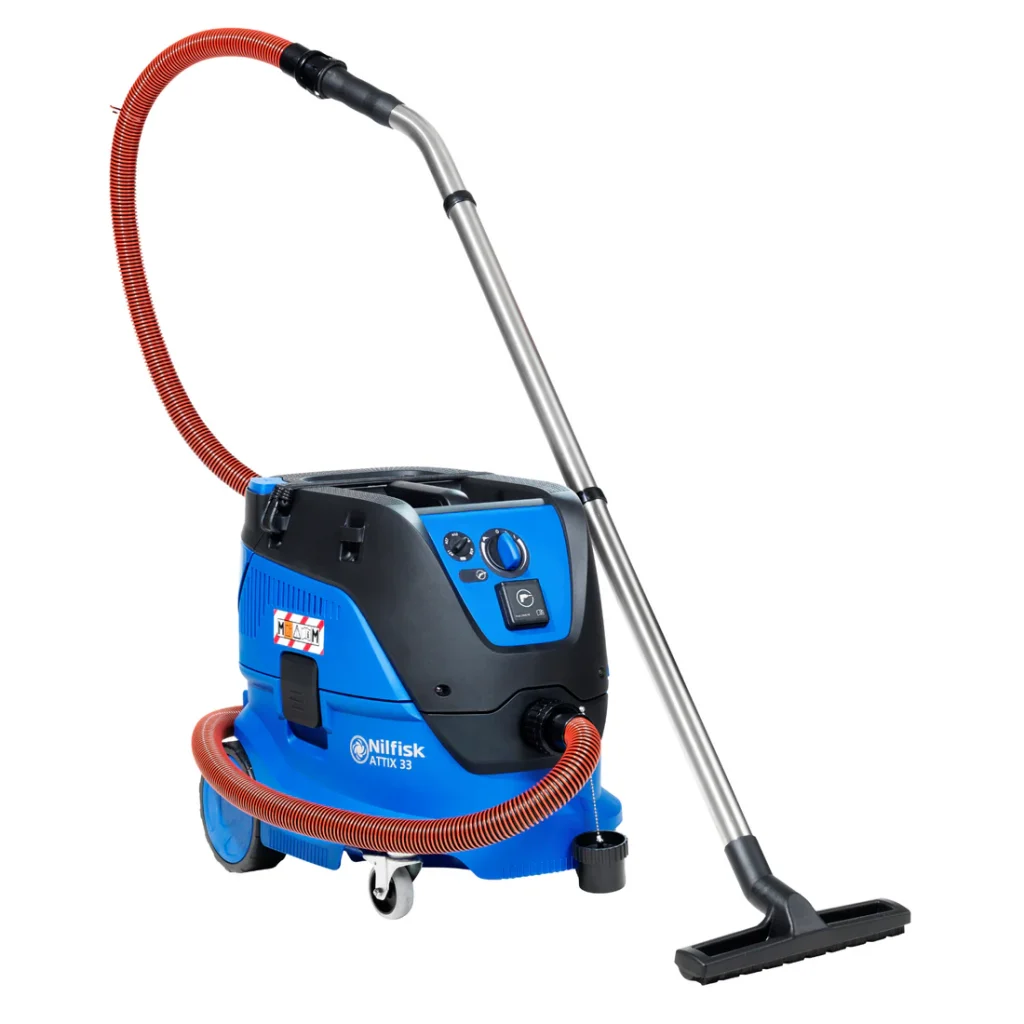
For tradespeople needing certified M-Class dust extraction in a mobile package, the ATTIX 33 2M is a high-performance wet-and-dry vacuum delivering an airflow rate of 4,500 L/min and 250 mbar suction.
The Push&Clean filter system works alongside an automatic power-tool start/stop socket, which maintains continuous suction while protecting operators from hazardous fine dust. At approximately £930, it sits in the sweet spot between basic entry-level shop vacuums and overly heavy, expensive industrial extraction systems.
Nilfisk ATTIX 50-01 PC 110V 50HZ GB Vacuum Cleaner
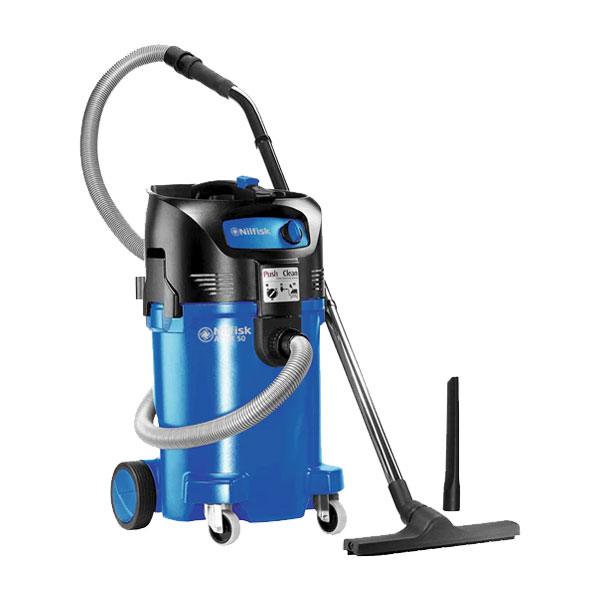
For site contractors needing high-capacity cleanup on 110V power, the ATTIX 50-01 PC is a versatile wet-and-dry vacuum cleaner featuring a large 47-litre container and 3,200 L/min of airflow. The Push&Clean filter cleaning system lets users restore suction at the press of a button, which eliminates tedious filter teardowns during demanding jobs. At approximately £675, it sits in the sweet spot between compact workshop vacuums and oversized multi-motor industrial units.
Nilfisk Pros and Cons
A balanced view of Nilfisk as a brand helps you decide whether their equipment is the right fit for your specific needs and budget.
Advantages
- Filtration excellence: Nilfisk’s H-class and HEPA filtration systems are genuinely best-in-class. For operations subject to workplace exposure limits, particularly the HSE’s silica dust PEL of 0.1 mg/m³, their vacuums provide measurable compliance rather than vague marketing claims.
- Build quality and durability: Professional and industrial Nilfisk machines are built for daily use over years, not months. Steel components, reinforced hoses, and quality motors translate to lower total cost of ownership despite higher upfront prices.
- ATEX certification range: Few manufacturers offer the breadth of ATEX-certified equipment that Nilfisk does. For facilities handling combustible dusts, this matters: the relationship between particle size, surface area, and combustibility means fine dust is exponentially more dangerous than bulk material, and only properly certified equipment should be used.
- Ergonomic design: Nilfisk consistently scores well on user comfort. Features like low noise levels, balanced weight distribution, and intuitive controls reduce operator fatigue during extended shifts.
- Global parts and service network: With operations in over 100 countries, getting parts, servicing, and technical support is straightforward compared to smaller or import-only brands.
- Environmental commitments: Nilfisk has made measurable progress on reducing energy consumption and material waste across their product lines, with several models carrying recognised eco-labels.
Drawbacks
- Higher upfront cost: Nilfisk products typically cost 20-40% more than comparable machines from budget brands. For operations with tight capital budgets, this can be a genuine barrier even when the long-term economics favour Nilfisk.
- Consumer range is underwhelming: While their professional equipment is outstanding, Nilfisk’s domestic products don’t always justify the premium over strong competitors like Kärcher’s consumer lineup. The gap narrows significantly at the professional tier.
- Availability of niche models: Some specialist machines, particularly ATEX-rated units and larger industrial scrubbers, can have lead times of several weeks in the UK. Stock availability varies by dealer.
- Complexity of industrial range: The sheer number of models, configurations, and accessories in Nilfisk’s industrial catalogue can be overwhelming. Without guidance from a knowledgeable dealer or specialist, there’s a real risk of specifying the wrong machine.
- Battery technology: While Nilfisk’s battery-powered machines are improving, some users report that runtime and charge times still lag behind the best lithium-ion platforms offered by competitors in the outdoor power equipment space.
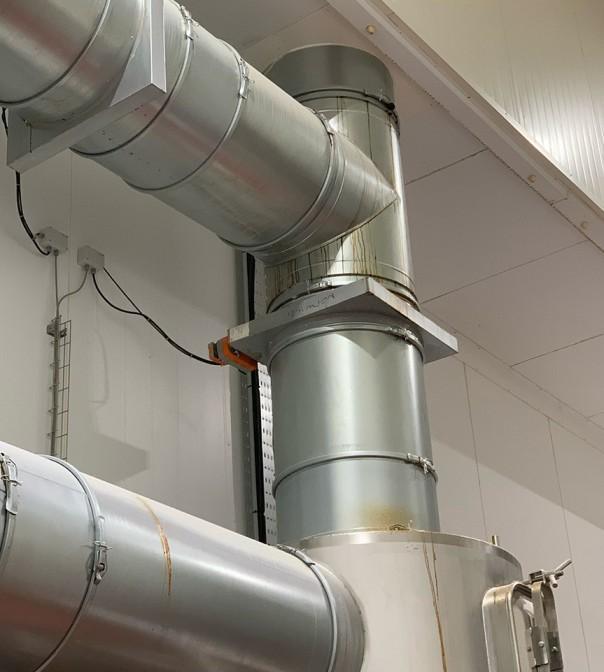
Why High-Level Dust Builds Faster in Cold Weather and What Sites Should Do About It
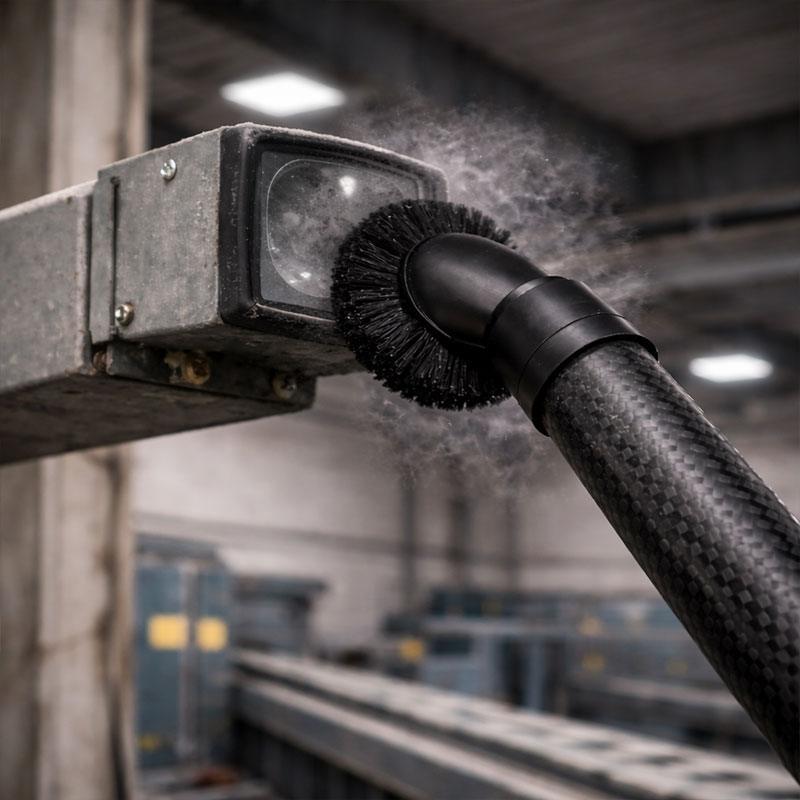
Stop False Trips: High-Level Cleaning That Stabilises Sensors and Keeps Lines Moving
UK High-Level Cleaning: Reduce Working at Height with a Ground-Based Method
Three Simple Checks to Keep High-Level Dust Under Control
Night, Weekend or Live? How to Plan High-Level Cleaning Around Production
Start-Up and Shut-Down: A Quick High-Level Dust Checklist

The 10-Minute High-Level Dust Check for Busy Production Teams
BRCGS Audit: 7 High level Cleaning Pitfalls That Trigger Findings And How To Avoid Them

Dust Fallout Paths: How High-Level Dust Reaches Product — And How To Stop It