Explosive atmospheres remain one of the most dangerous hazards in industrial environments, responsible for fatalities, facility destruction, and regulatory shutdowns every year. With the European Commission releasing the 6th Edition of the ATEX 2014/34/EU Guidelines in January 2026, and the UK refreshing its own designated standards list, 2026 marks a year where compliance expectations have tightened across the board. Whether your facility handles combustible dust, flammable gases, or volatile solvents, understanding your obligations under ATEX regulations is not optional: it is a legal and moral requirement. The consequences of getting it wrong range from criminal prosecution and unlimited fines to catastrophic loss of life, as disasters like the 2008 Imperial Sugar refinery explosion remind us. That incident killed 14 workers and injured 38, largely because accumulated sugar dust was never properly managed. This guide breaks down what industrial facilities need to know right now: the directives, the zoning rules, equipment requirements, documentation, and the inspection protocols that keep people safe.
Free 2-Minute Assessment
Could Dust Accumulation Be Creating a Risk in Your Facility?
Use our free Dust Risk Assessment to get an indicative cleaning priority based on your facility, dust conditions and current cleaning arrangements.
Take the Free Dust Risk Assessment
✓ Takes around 2 minutes
✓ Free to use
✓ Instant indicative result
Understanding the 2026 ATEX Regulatory Landscape
The ATEX framework governs how equipment is manufactured, installed, and maintained in potentially explosive atmospheres across Europe and, with some divergence, the UK. Two directives form the backbone of this system, and understanding the distinction between them is the first step toward compliance.
Core Differences Between ATEX 114 and ATEX 153 Directives
ATEX 114 (Directive 2014/34/EU) targets manufacturers and suppliers. It sets out the essential health and safety requirements for equipment and protective systems intended for use in explosive atmospheres. If you are purchasing a motor, sensor, or lighting unit for a hazardous zone, the manufacturer must have certified it under ATEX 114 before it reaches you.
ATEX 153 (Directive 1999/92/EC) is the employer’s directive. It places the legal duty on facility operators to assess explosion risks, classify hazardous areas into zones, and protect workers through a combination of technical and organisational measures. The two directives work in tandem: ATEX 114 ensures the equipment is safe, and ATEX 153 ensures the workplace is safe.
Recent Legislative Updates and Compliance Deadlines
The 6th Edition of the ATEX 2014/34/EU Guidelines, released in January 2026, aims to “ensure a consistent interpretation of the ATEX Product Directive” across manufacturers, importers, distributors, notified bodies, and market surveillance authorities. These updated guidelines clarify grey areas around hybrid mixtures and refined definitions for equipment groups.
In the UK, the regulatory picture has evolved post-Brexit. The UK’s designated standards for explosion-protected equipment were most recently updated on 18 March 2026, reflecting continued alignment with international best practice while maintaining a distinct national framework. Facilities operating across both UK and EU jurisdictions need to track both sets of standards carefully, as divergence is gradually increasing.
Classification and Zoning of Potentially Explosive Atmospheres
Correct zone classification is the foundation of every ATEX compliance programme. Get the zones wrong and every subsequent decision, from equipment selection to maintenance scheduling, will be flawed.
Defining Zones for Gases, Vapours, and Mists
For gases, vapours, and mists, three zones apply. Zone 0 is where an explosive atmosphere is present continuously or for long periods: think the inside of a storage tank containing flammable liquid. Zone 1 covers areas where an explosive atmosphere is likely to occur during normal operations, such as the area immediately surrounding a filling point. Zone 2 applies where an explosive atmosphere is not likely during normal operations but may occur briefly: a well-ventilated room containing sealed pipework, for example.
The classification directly determines which equipment categories are permitted. Zone 0 demands Category 1 equipment with two independent means of protection. Zone 2 allows Category 3 equipment with basic protection. There is no room for guesswork here.
Distinguishing Dust Explosion Risks in Industrial Settings
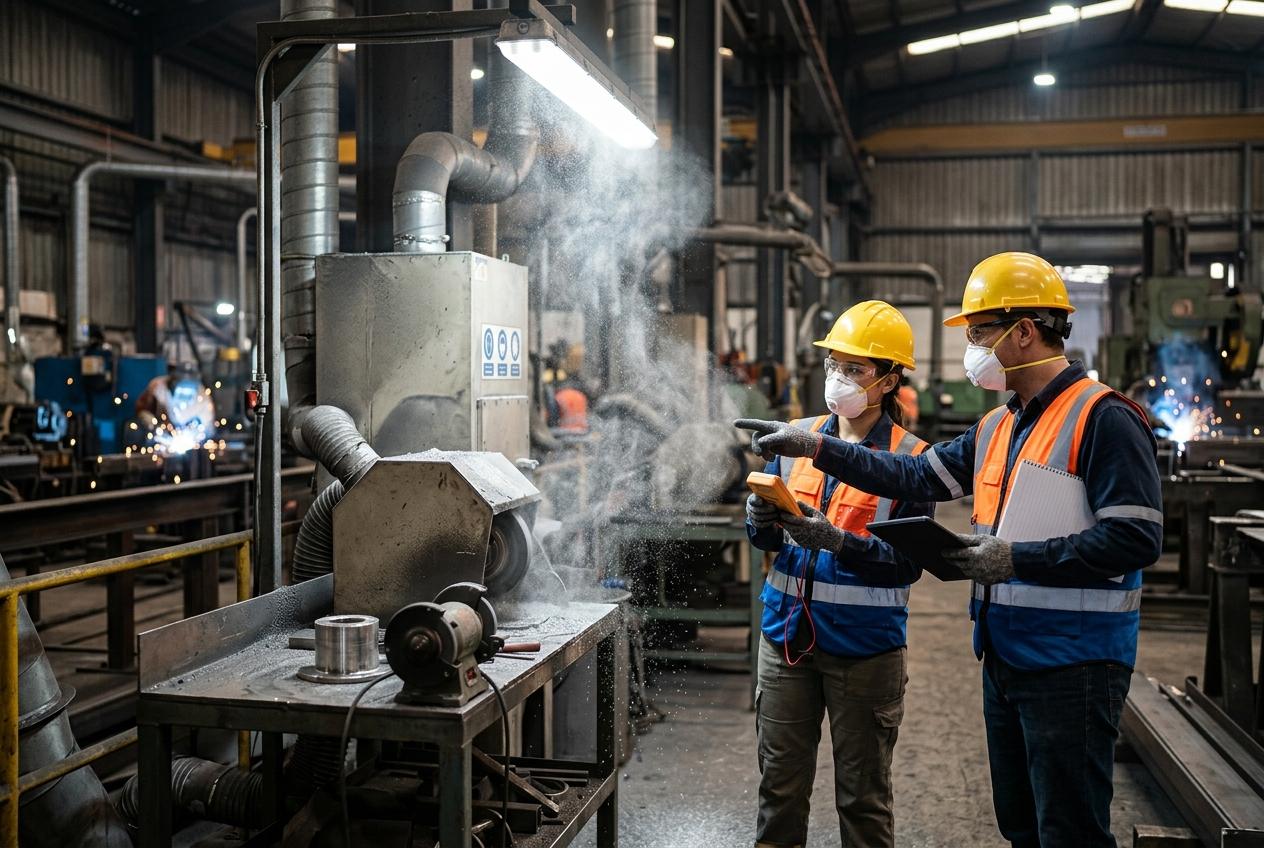
Dust zones follow a parallel structure: Zone 20 (continuous cloud), Zone 21 (occasional cloud during normal operations), and Zone 22 (brief or infrequent cloud). What makes dust particularly treacherous is the relationship between particle size and combustibility. Fine dust has an exponentially larger surface area relative to its mass, meaning it reacts with oxygen far more readily than a solid block of the same material.
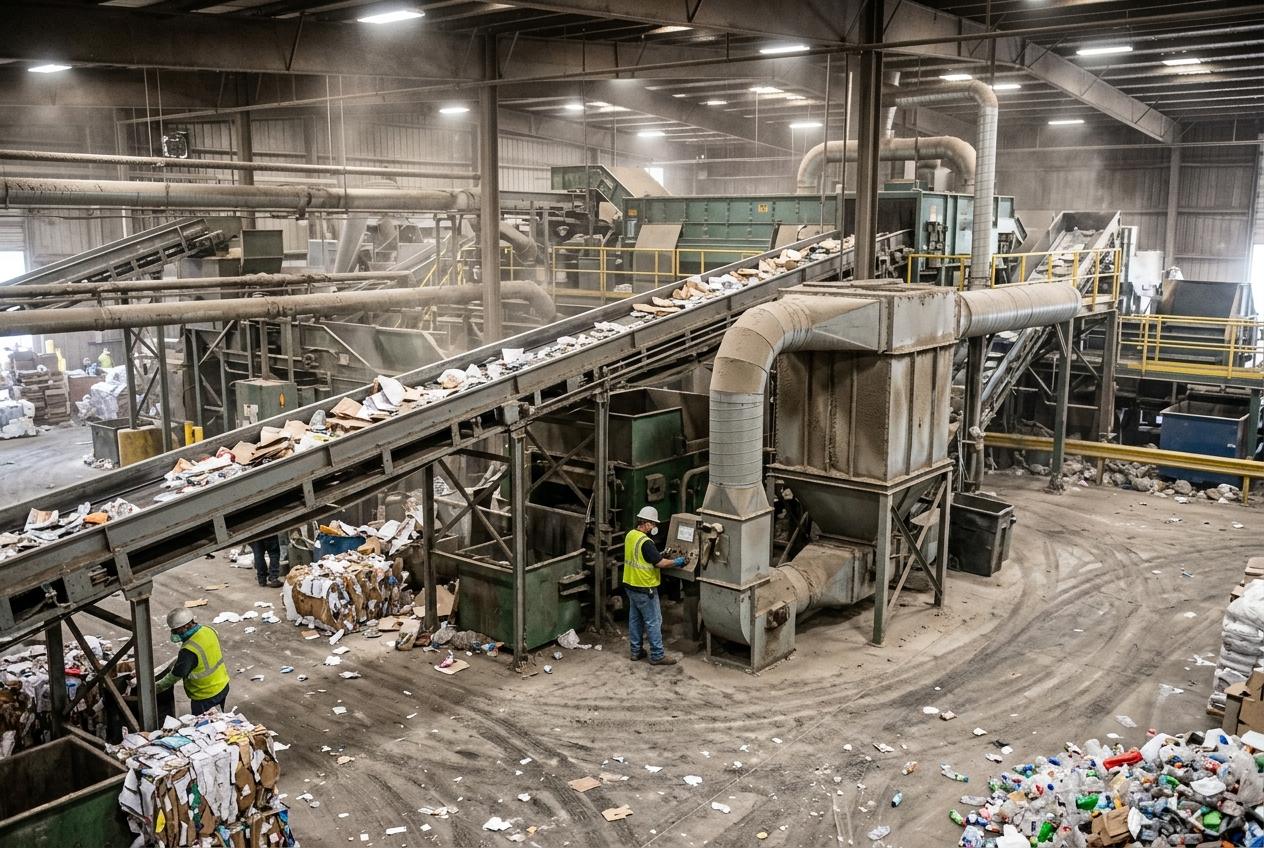
The real danger lies in secondary explosions. A small initial ignition, perhaps inside a bucket elevator or pneumatic transfer line, sends a pressure wave through the facility that disturbs settled dust on structural beams, cable trays, and equipment tops. That suspended dust cloud then ignites, creating a far more devastating blast. This is precisely what happened at Imperial Sugar, where layers of accumulated dust turned a localised event into a facility-wide catastrophe.
Equipment Selection and Certification Requirements
Choosing the right equipment is where compliance translates into physical hardware on your site. The wrong motor or sensor in the wrong zone is not just a regulatory breach: it is a potential ignition source.
Interpreting Equipment Categories and Protection Levels
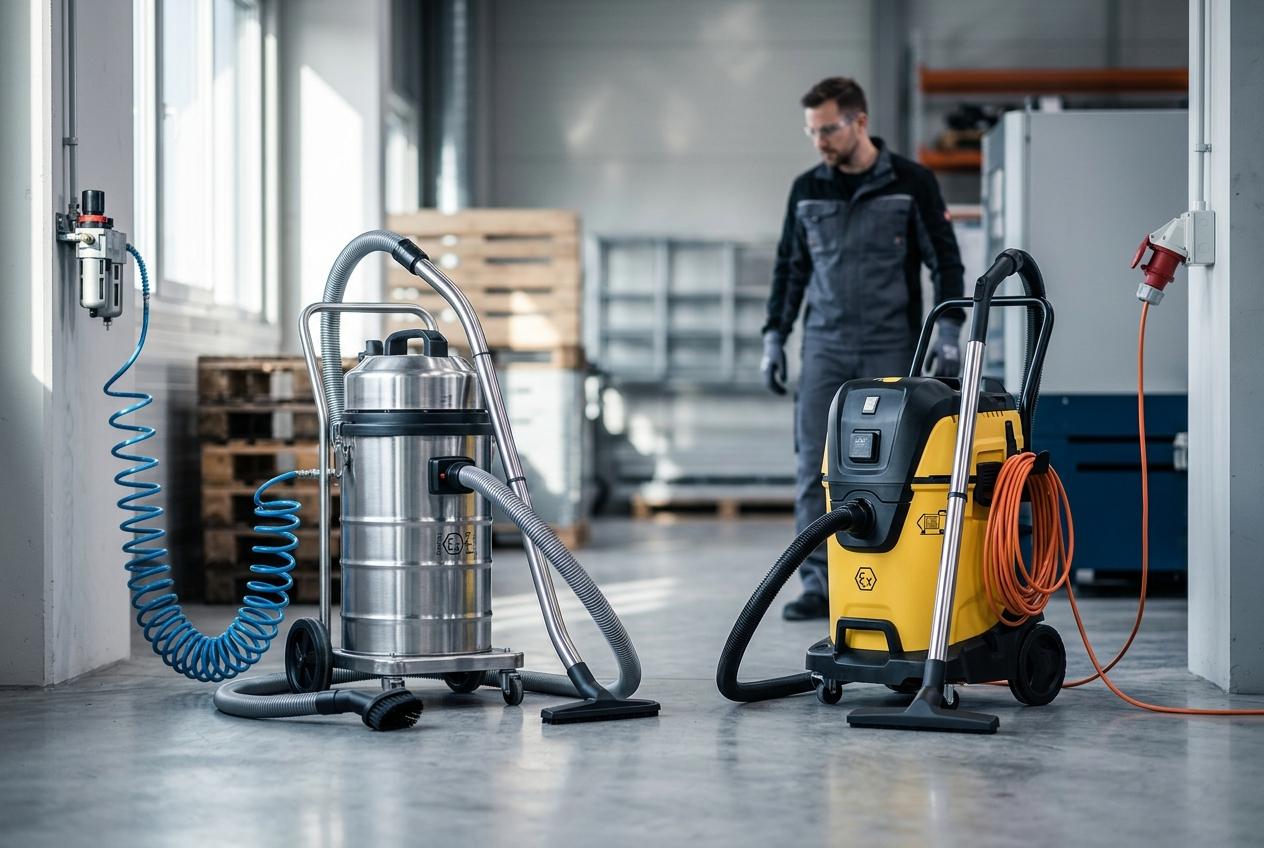
Equipment is classified into Groups (I for mining, II for surface industries) and Categories (1, 2, or 3, corresponding to the level of protection). Category 1 equipment must remain safe even with two simultaneous faults, making it suitable for Zone 0 or Zone 20. Category 2 equipment handles one fault condition and suits Zone 1 or Zone 21. Category 3 provides normal protection for Zone 2 or Zone 22.
The intrinsically safe equipment market reflects how seriously industry takes these requirements. The sector is forecast to exceed $5.5 billion by 2030, growing at a 7.45% CAGR driven by IoT-based monitoring, 5G connectivity, and edge computing. Smart sensors that can operate safely in Zone 1 environments are no longer niche products: they are becoming standard procurement items.
The Role of Notified Bodies in Product Certification
Manufacturers cannot self-certify Category 1 or Category 2 equipment. A Notified Body, an independent organisation designated by a national authority, must examine the design, test prototypes, and audit the quality management system before issuing an EU-type examination certificate. For Category 3 equipment, manufacturers can use internal production control, but they must still maintain a technical file demonstrating compliance.
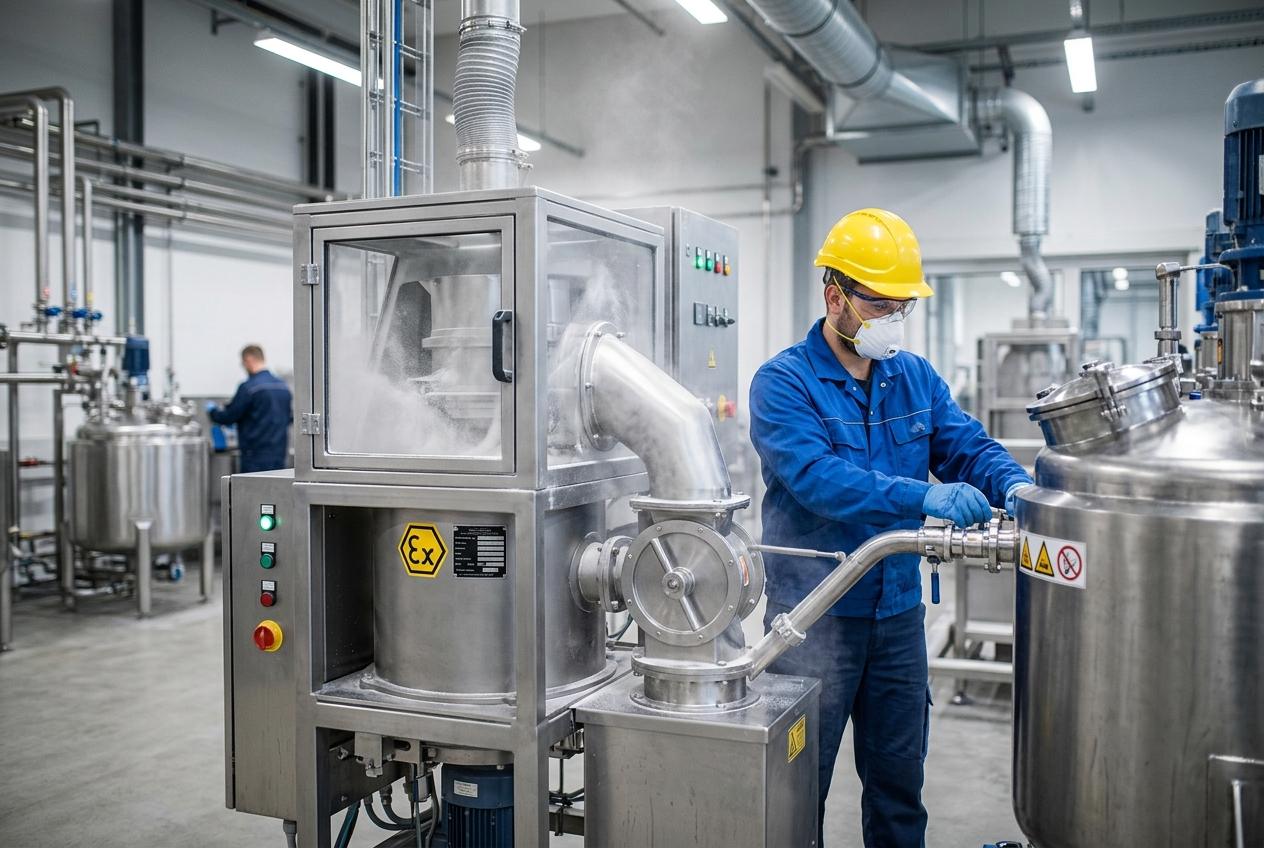
When purchasing equipment, always verify the certificate number, the Notified Body’s identification number, and the specific marking (the Ex hexagon symbol, equipment group, category, and gas/dust designation). Counterfeit or improperly marked equipment does enter supply chains, and the liability falls squarely on the facility operator who installs it.
Implementing Robust Explosion Protection Documents
Under ATEX 153, every employer operating a site with potentially explosive atmospheres must produce and maintain an Explosion Protection Document (EPD). This is not a box-ticking exercise: it is a living document that regulators will scrutinise.
Conducting Thorough Site Risk Assessments
The risk assessment must identify all potential sources of explosive atmospheres, all potential ignition sources, and the likely consequences of an explosion. The Explosion Pentagon model is useful here: fuel, oxygen, ignition source, dispersion, and confinement must all be present for an explosion to occur. Remove any one element, and the risk is eliminated or substantially reduced.
A proper assessment examines not just normal operations but also foreseeable abnormal conditions: maintenance activities, equipment failure, spillages, and start-up or shutdown procedures. The HSE is planning around 14,000 proactive inspections in 2025/26, with explosion risks among the priorities. Facilities that cannot produce a current, comprehensive EPD during an inspection face enforcement action.
Technical and Organisational Safety Measures
The Hierarchy of Controls applies directly. Elimination comes first: can the process be redesigned to avoid creating an explosive atmosphere entirely? If not, engineering controls follow: ventilation systems, gas detection, pressure relief venting, and explosion suppression systems. Administrative controls, including permit-to-work systems, training programmes, and restricted access zones, form the final layer.
Organisational measures are often underestimated. Staff training must be specific, documented, and refreshed regularly. A permit-to-work system for hot work in or near hazardous zones is not optional: it is a baseline expectation. Every person entering a classified zone should understand why the zone exists and what restrictions apply to their activities.
Maintenance and Inspection Protocols for Ongoing Safety
Compliance does not end at installation. Equipment degrades, conditions change, and complacency creeps in. A structured maintenance and inspection regime is what separates a compliant facility from one waiting for an incident.
Routine Inspection Cycles and Competency Standards
Inspections of equipment in hazardous areas should follow the principles of BS EN 60079-17, which defines three grades: visual inspections (frequent, by trained operatives), close inspections (periodic, by competent persons), and detailed inspections (less frequent, requiring specialist knowledge and possibly partial disassembly). The intervals depend on the zone classification, equipment type, and environmental conditions.
Competency is critical. The person conducting a close or detailed inspection must understand explosion protection concepts, recognise faults that could compromise safety, and know the specific requirements for the equipment types they are examining. Generic electrical qualifications are not sufficient.
Managing Repairs and Modifications to Certified Equipment
Any repair or modification to certified equipment must maintain the original level of protection. Replacing a cable gland on an Ex d flameproof enclosure with a non-certified alternative, for instance, invalidates the entire certification. Repairs should be carried out by competent persons following the manufacturer’s instructions or relevant standards.
Modifications are even more sensitive. Drilling a new cable entry into a flameproof enclosure, adding a sensor to a certified assembly, or changing the internal wiring all require reassessment. In many cases, the Notified Body that issued the original certificate must be consulted. Document every repair and modification in the EPD and the equipment’s maintenance log.
Future-Proofing Facilities Against Evolving Standards
ATEX regulations will continue to evolve. The growing adoption of IoT sensors, wireless monitoring, and edge computing in hazardous areas is creating new certification challenges that standards bodies are actively working to address. Facilities that build flexibility into their compliance programmes now, rather than treating compliance as a one-off project, will adapt more efficiently as requirements shift.
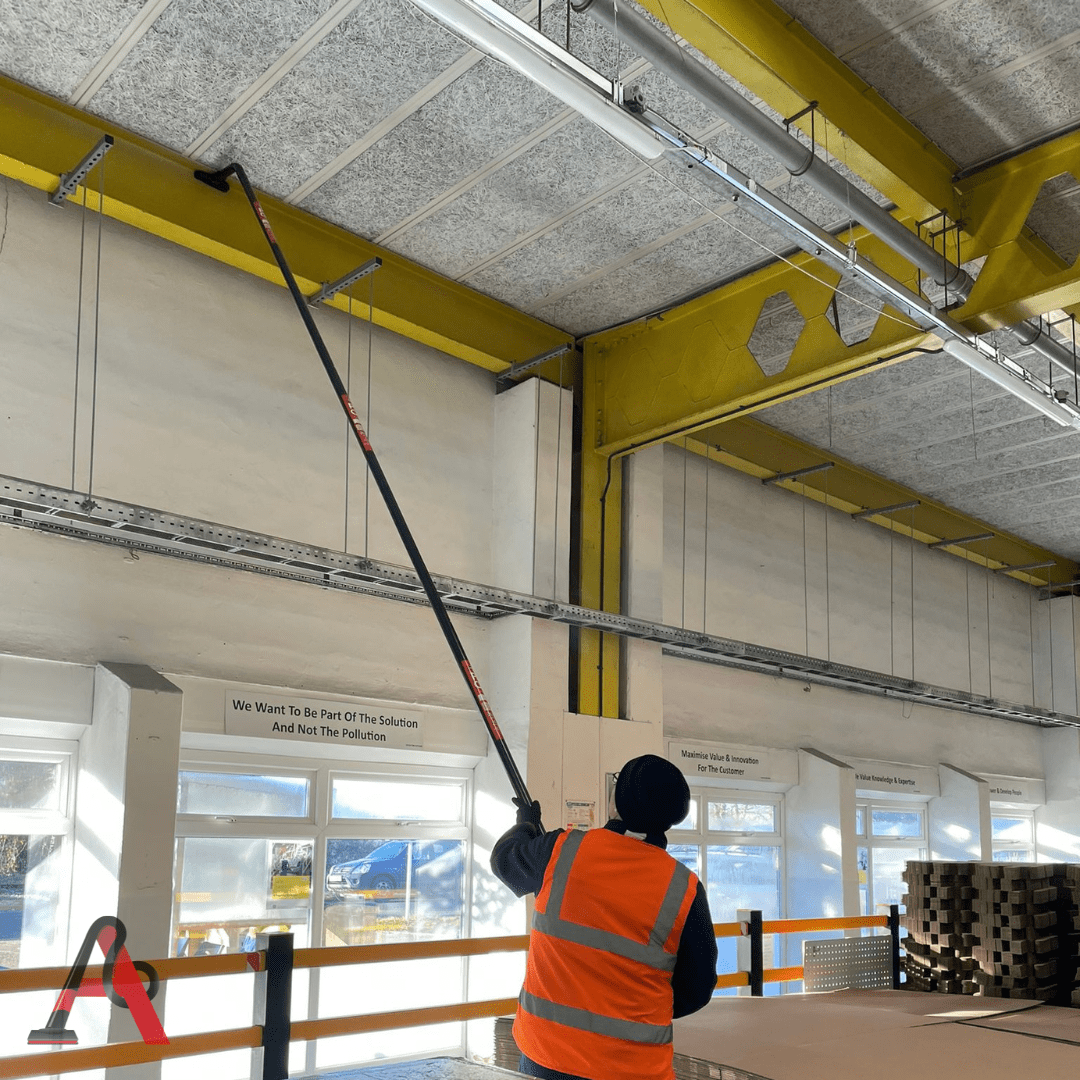
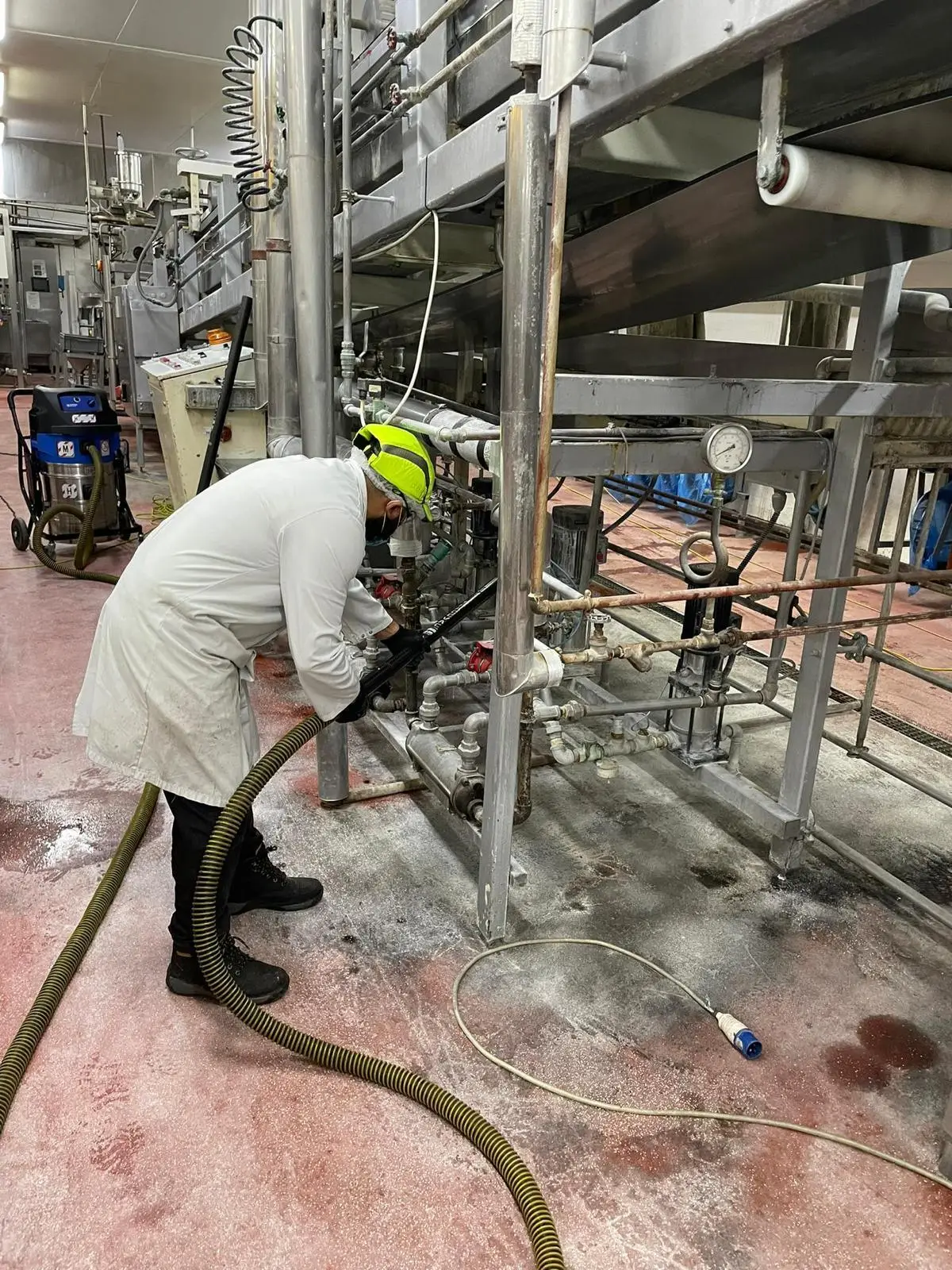
Practical steps include maintaining a centralised equipment register with certification details, scheduling annual EPD reviews, and building relationships with competent inspection providers. Dust accumulation in overlooked areas: structural beams, the tops of cable trays, the interiors of ductwork: remains one of the most common findings during inspections. A proactive housekeeping programme targeted at these specific locations significantly reduces both explosion risk and regulatory exposure.
If you are uncertain whether your facility meets current standards, or if dust and debris have been building up in hard-to-reach areas, our specialists can visit your site, identify compliance gaps, and recommend practical solutions at no cost to you. Book a free site assessment to get a clear picture of where you stand before the next inspection arrives.