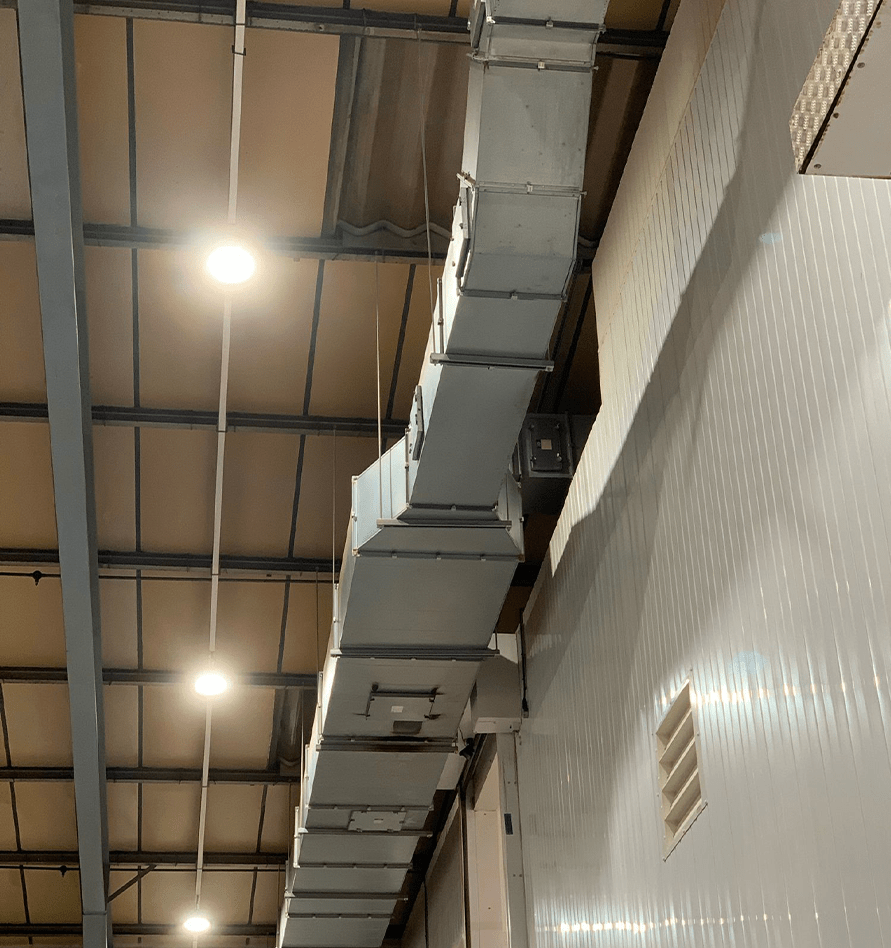
You don’t need a shutdown to keep high-level dust in check. Most of the dust that ends up on guards, fillers and lenses comes from a few predictable places at height. This short guide gives you three simple checks you can run on any shift. Each check takes minutes, uses ground-based tools, and leaves you with the proof you need.
We work from the safety of the ground up to 16 m using carbon fibre poles and purpose-built heads. No MEWPs in most cases, minimal disruption, and clear evidence when we’re done.
Could Dust Accumulation Be Creating a Risk in Your Facility?
Use our free Dust Risk Assessment to get an indicative cleaning priority based on your facility, dust conditions and current cleaning arrangements.
Take the Free Dust Risk AssessmentCheck 1: Cable tray lips above conveyors
Why this matters
Perforations and lips on cable trays trap fine dust. Vibration and airflow carry it straight down to rails and open product.
What to look for (1–2 minutes)
Stand at operator height and skim a torch across the tray edge. A dull, grey film on the lip or a faint build-up around the perforations means it’s time for a pass.
How to clean (3–5 minutes)
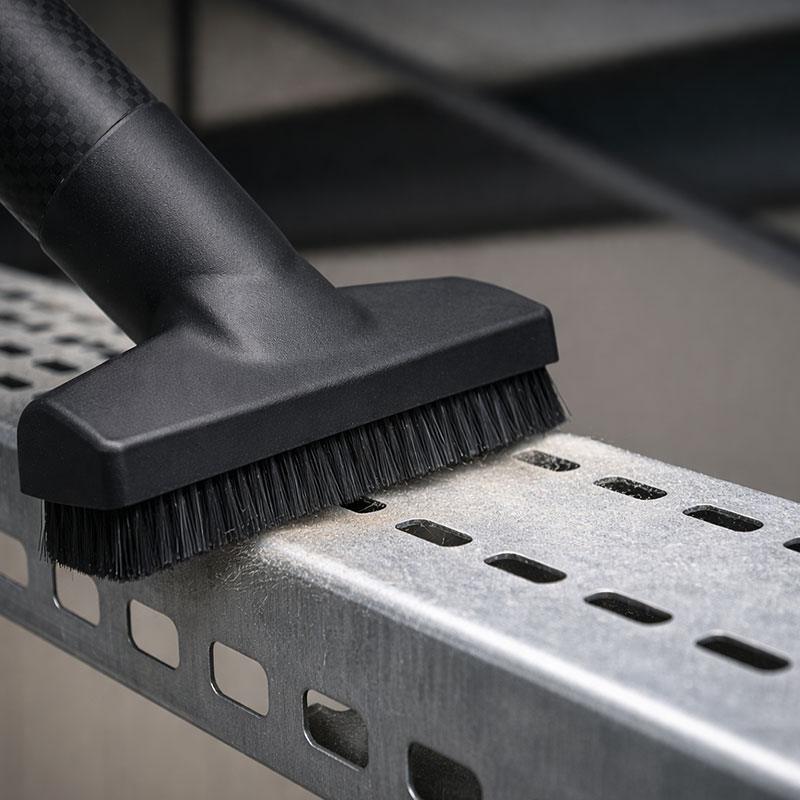
Use a tray brush from the ground.
Hold the head slightly canted so airflow draws across the perforations rather than letting bristles fall in.
Make slow, overlapping passes along the run.
Finish with a quick fall-zone tidy so nothing is left on guards or rails.
Evidence to file (under a minute)
One before and one after photo from the same angle. Name files by line, bay and date so you can find them later.
Check 2: Beam undersides over open product
Why this matters
Beam undersides and small ledges above the line are classic sources. Light vibration shakes fines loose; gravity does the rest.
What to look for (1–2 minutes)
Shine a narrow torch beam across the underside. If you see a soft, matt layer or tide marks, add it to today’s list.
How to clean (3–5 minutes)
- Fit the round brush head.
- Work slowly with overlap so the bristles lift dust into the airflow instead of pushing it on.
- If brackets or fixings sit under the run, follow up with an angled crevice head for the corners.
- Fall-zone tidy beneath the treated section.
Evidence to file (under a minute)
Before/after pair from the same position. Add a short note: “Round brush on beams; crevice head on fixings; fall-zone tidy completed.”
Check 3: Light fittings and sensor lenses
Why this matters
Dust on lenses reduces light levels and causes nuisance trips or mis-reads on sensors. It also looks poor during audits.
What to look for (1–2 minutes)
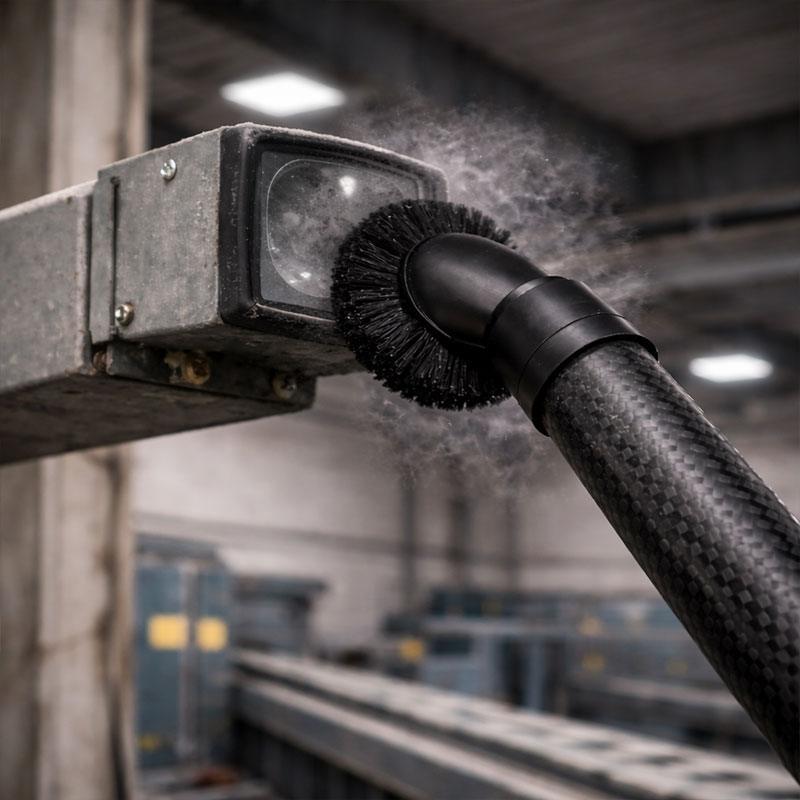
From the ground, angle your torch at the lens. A hazy bloom or visible film means the light or sensor needs attention.
How to clean (3–5 minutes)
- Follow site rules for any isolations/covers.
- Use a soft detailing head with very light pressure so the airflow does the work.
- Sweep edges and bezels with an angled crevice head.
- If a dusty steel sits directly above, give it a quick round brush pass to stop immediate re-fall.
- Fall-zone tidy below.
Evidence to file (under a minute)
Before/after photos from the same angle. If you track lux, jot the reading before and after for a simple data point.

Tools that make this fast (keep a small set on hand)
- Round brush – beams and broad ledges
- Tray brush – perforated cable trays and ladder racks
- Angled crevice head – bracket feet, lips and fixings
- Soft detailing head – lights, sensors and delicate housings
- Gooseneck – keeps the head flat where geometry is awkward
Switching heads takes seconds and prevents re-work.
A 20-minute routine you can copy
Walk the line (3–5 min): torch scan tray lips, beam undersides and lenses over open product.
Treat the worst (12–14 min): tray brush for trays → round brush for beams → soft head for lenses; crevice head for corners; fall-zone tidy as you go.
Prove and move (1–2 min): one before/after pair per area; short note on heads used; set a next due date based on what you saw.
Run this once per shift on busy lines, or weekly on lower-risk areas. It prevents the obvious build-ups that draw attention during walkabouts and audits.
Common mistakes to avoid
One head for everything: edges, perforations and lenses need different tools.
Rushing passes: quick strokes leave a film that shows under inspection lighting.
Skipping fall-zones: if rails and walkways beneath the clean are dusty, it looks like you never cleaned.
No proof: two photos from the same angle save time later.
FAQs
Usually not. These checks fit into short live micro-windows and take only a few minutes each.
Up to 16 metres, subject to geometry.
Where required we specify rated systems and anti-static tooling. We’ll agree controls in advance.

Nilfisk: Complete Product Guide & Reviews (2026)
Why High-Level Dust Builds Faster in Cold Weather and What Sites Should Do About It
Stop False Trips: High-Level Cleaning That Stabilises Sensors and Keeps Lines Moving
Night, Weekend or Live? How to Plan High-Level Cleaning Around Production
Start-Up and Shut-Down: A Quick High-Level Dust Checklist

The 10-Minute High-Level Dust Check for Busy Production Teams
BRCGS Audit: 7 High level Cleaning Pitfalls That Trigger Findings And How To Avoid Them

Dust Fallout Paths: How High-Level Dust Reaches Product — And How To Stop It

Why ATEX-Certified Vacuums Are Essential for Safety in Explosive Environments